How to Make Money on Instagram: 7 Ways and Real Sales Data
How to make money on Instagram: brand deals, affiliate links, shops, courses and DM sales. The scale of each way, plus $454k in sales logged in our dashboard.
 Maciej RakCEO and co-founder
- 8 min read

There are seven ways to make money on Instagram: brand deals, affiliate links, Instagram’s own tools, digital products, physical products, booked services, and your own offer sold in a DM conversation. Instagram itself pays little, so the money comes from brands or directly from your customers.
Most guides stop at rates per post. We also have a dashboard where Setor clients log what they sold through DM conversations, so the last method comes with real amounts.
- $454kin sales logged in the dashboard
- 5,078booked calls in 90 days across 48 accounts
- 1 in 2booked calls starts with a welcome to a new follower
- 68.8%of calls get booked outside working hours
The seven ways at a glance
| Method | Best for | Scale |
|---|---|---|
| Brand deals | Creators with an engaged audience | $25 to $150 per post at 1,000 to 10,000 followers |
| Affiliate links | Accounts recommending products in one niche | Commission on each sale from your link |
| Instagram’s tools | Creators with large reach | An add-on to other income |
| Digital products | Experts with knowledge to sell | Price times purchases, and it takes many conversations |
| Physical products | Stores and brands | Margin times orders |
| Booked services | Clinics, studios, local services | Visits on the calendar |
| Offer sold in conversation | Coaches, trainers, mentors, consultants | Median sale of $621 |
1. Brand deals
A brand pays you for a post, Reel or story. Rates grow with reach: Shopify’s 2026 guide lists $25 to $150 per post at 1,000 to 10,000 followers and $250 to $5,000 at 10,001 to 100,000. The full table is in how much money you can make on Instagram.
To start, prepare a short description of your account: topic, audience, reach and examples of your content. Instagram also runs its own Creator Marketplace, where brands look for creators. Label every paid partnership as an ad.
This model has one limit: the amount depends on the brand’s budget and on how many sponsored posts your audience will put up with.
2. Affiliate links
You recommend someone else’s product through your link or discount code and earn a commission on each sale. It’s easy to start because you don’t need your own offer. It works best when the account sticks to one niche and the audience trusts your recommendations.
A simple way to get more clicks is automation: someone comments a chosen word and gets the link in a private message. We cover the setup on the Instagram auto reply page.
3. Instagram’s own monetization tools
Instagram gives creators gifts on Reels, badges on live streams, paid subscriptions and bonuses. Instagram itself says bonuses are limited-time and invite-only, so you can’t simply switch them on. Your professional dashboard shows which tools you have.
Treat these as an add-on. The creator @itsmodernmillie showed $18.84 for 1.9 million views on Instagram. Views alone rarely pay the bills.
4. Digital products
Courses, e-books, templates and recordings sell on the spot with high margins. An Instagram shop won’t work here, because Meta’s commerce policies don’t allow downloadable content or digital subscriptions. That leaves the link in your bio and the link you send in a conversation.
A creator of courses for parents of infants sells exactly this way with Setor. Setor asks about the child’s age and the country, shows the course for that stage and sends the link. In the best 30 days, 24 parents confirmed a purchase in DMs, and the median dollar order in that account’s store is $94.
A cheap product takes many conversations, so automation matters. There’s more on that in selling low-ticket offers.
5. Physical products
You set up a business account, build a catalog in Commerce Manager and tag products in posts and Reels. Since 2025, buyers pay on your website rather than in the app, so you need your own online store. We go through it step by step in how to sell on Instagram.
6. Booked services
A clinic, studio or local service sells a time slot. It’s enough to answer questions fast and send a booking link. At a teeth whitening clinic, Setor answers questions about the promotion, asks for the city and sends the link. That produced 13 booked visits in the best 30 days, and the median reply time fell from 6 hours to 3.5 minutes.
7. Your own offer, sold in conversation
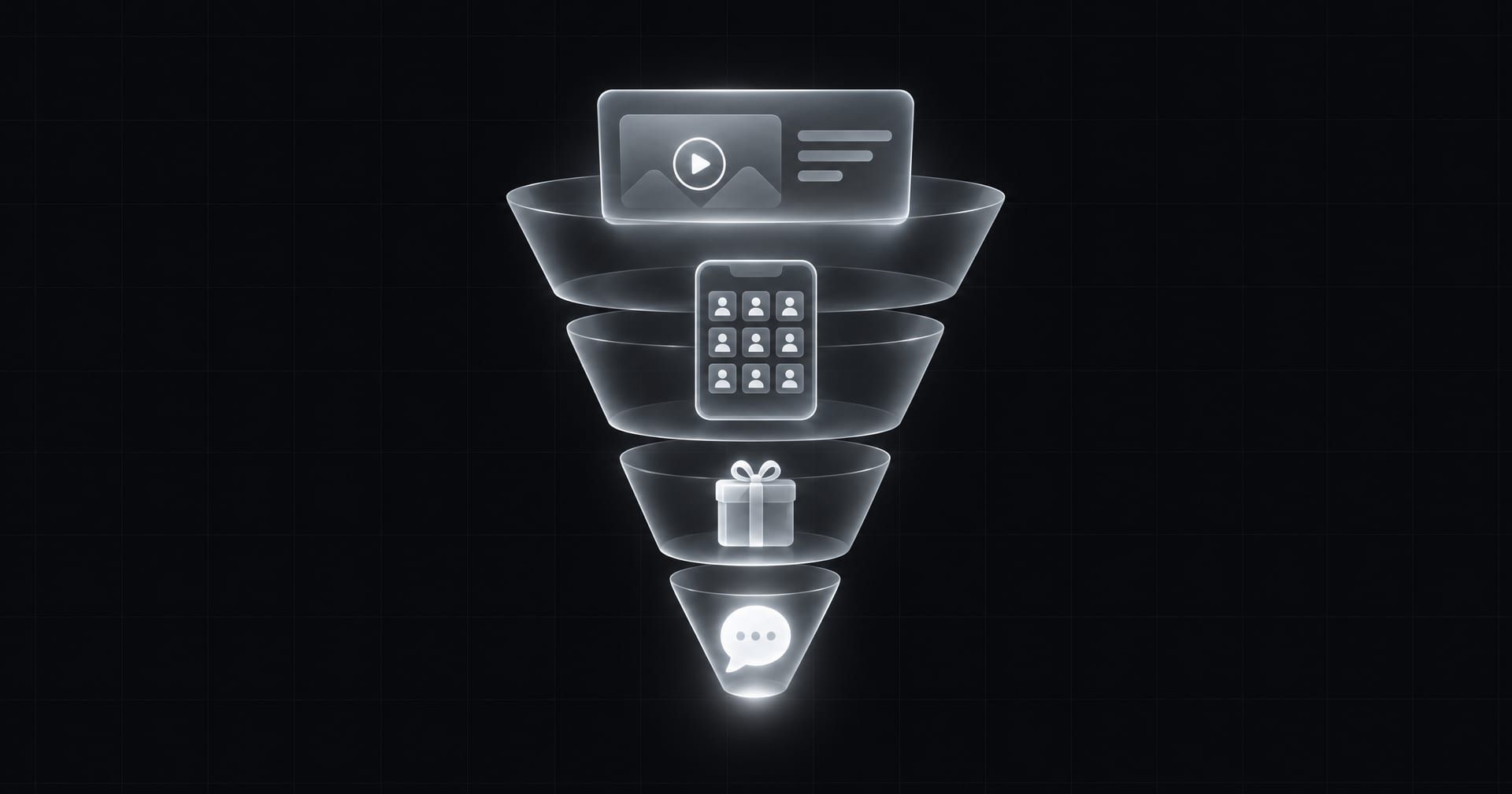
This is where we have the most data. A trainer, mentor or consultant doesn’t need a brand or huge reach, only conversations with people who have a problem they can solve. The path is almost always the same: a comment, follow or message, then questions in DMs, then a call on the calendar, where the offer gets made. 47 of the 48 accounts that booked a call in the last 90 days have a calendar link set up, and 29 describe the call as free.
What it brings in. The dashboard holds 592 sales with an amount, $454k in total, of which $381k has been paid. Only some clients enter amounts, so this is a lower bound. In October alone, 12 clients logged $195k. The median client logged $6,283, and the best logged $89k.
These are totals and best results, not a forecast for every account. Two examples, both from the best 30 days:
- Online personal trainer: 158 sales, $87.5k.
- Mentor for experts and coaches: 12 sales, $38.9k.
Where the calls and money come from. The last 90 days:
| Source | Booked calls | Logged sales |
|---|---|---|
| New followers | 2,573 | $140k |
| Comments | 1,424 | $55k |
| Direct messages | 457 | $17k |
| Lead forms from ads | 431 | $3.4k |
The strongest channel is one that guides rarely mention: writing to a new follower. Instagram’s built-in welcome only appears once someone opens a chat with you, while Setor’s welcomes go out to everyone who follows you.
Every 1,000 welcomes bring 303 replies, 9 booked calls and $502 in logged sales. That's the result across all accounts combined.
Why a person rarely keeps up. A conversation that ends in a booking has a median of 24 messages, 14 of them from the lead. On top of that, 68.8% of calls get booked outside 9:00 to 17:00 on weekdays, and Sunday is the strongest day. That’s why Setor clients hand these conversations to the AI appointment setter, which also replies in the evening and at weekends.
How to earn money on Instagram with a small account
You don’t have to wait for a big following. The smallest account with a logged sale in the last 90 days had 3,316 followers, and the most money was logged by accounts with 10,000 to 50,000 followers rather than those with over 100,000. The full data is in how much money you can make on Instagram.
- Pick one offer. One problem, one audience, one price.
- Turn comments into conversations. Ask for a word in the comments and send the material by DM. 98 in 100 automation runs start from a comment.
- Write to new followers. Keep it short and ask a question. An opener of up to 8 words beats a longer one on 81% of accounts.
- Reply in the evening and at weekends. That’s when people have time to write.
- Log every sale against the conversation. Otherwise you can’t tell which source brings the money. That’s what the Instagram CRM is for.
FAQ
Does Instagram pay for followers or views?
It doesn’t pay for followers. It only pays for content performance through bonuses, which are limited-time and invite-only. Most income on Instagram comes from brands or your own customers.
How many followers do you need to make money on Instagram?
There’s no threshold. You can use affiliate links and sell your own offer from day one, and brand deals usually start at around 1,000 followers.
How do you monetize Instagram?
Switch to a professional account and open the professional dashboard, which shows the tools available to you. Selling your own offer doesn’t require switching anything on.
Which method is best to start with?
Your own offer, sold in conversation. You don’t wait for a brand, and one sale can bring in more than several sponsored posts: the median sale in Setor’s dashboard is $621.
Do I need a company?
Regular sales and paid partnerships usually come with formalities that depend on your country and scale. Ask an accountant before you start selling.
Where the numbers come from
Read from Setor’s database on November 2, 2026, read-only, aggregates only, no account names. Amounts converted at 3.7 PLN per USD and rounded down.
- Logged sales: won calls with an amount on accounts billing in PLN, 15 accounts belonging to 14 clients. Sales without an amount aren’t counted.
- Booked calls and sources: last 90 days, excluding merged, cancelled and imported calls. Hours are Warsaw time.
- Account settings: the 48 accounts with a booked call in the last 90 days, with free calls counted by words in the calendar description.
- Welcomes: 279,113 sends across 77 accounts, a 30.3% reply rate including the reminder. The full definition is on the welcome message page.
- Rates per post: Shopify’s guide (shopify.com, April 2026), which are market estimates rather than our data.
Start with the conversations already coming to you. Start now and see what Setor would reply in your DMs.